Sunday, 27 March 2016

Curioser and Curiositea; 'Turkish Apple, Yoghurt & Lime'

Firstly, merry Easter to one and all. Hope your Bank Holiday weekend has been relaxing and fruitful and everything you wanted from it. I also hope you hangovers tomorrow from excess wine and champers on this day of resurrection are not overly painful and that, unlike Jesus, you won't need three days to rise again.

I am well underway with my celebrations. The roast has been cooked and eaten, the vegan brownies devoured, the Oxford Cambridge boat race on the televisual screen and a pot of fancy tea brewed and being sipped upon.

How better to do Easter than with tea? And I figured I ought to share this little bit of Sunday joy with you all.

Today we have opted (amongst many) to indulge in 'Turkish Apple, Yoghurt & Lime'. It was one half of a gift from a friend for allowing her to stay at mine a few weekends ago. It was bought somewhere in York, I believe, from a company called Hebden Tea. In truth, I only know this because their logo is blazoned across the label. I have tried this tea before now, and I am certainly a fan, but this is my first time sharing it with family. I say family; I mean my father. He's like my back up tea drinker, with whom I bounce opinions on tea off of.

This tea is technically not a tea; it is, and I can hear your shudder the other side of the internet, a fruit infusion. I know, I know. I am a heathen. But hear me out. While supermarket bought, mass produced fruit infusions often taste like nought but hot water, or occasionally like it has been sieved through a shirt, artisan fruit infusions can be very pleasant. I have no qualms with finely made fruit infusions.

So, this Turkish tea, what of it? It is made up from solid pieces of dried apple, pineapple and lemongrass; there is also some flavouring, which I presume is the 'yoghurt' portion of this beverage. After letting it brew for a solid six or seven minutes (fruit infusions need this long, otherwise their flavour is weak and pitiful) it was ready for drinking. It has an intense yellow colour and a strong aroma, a heady mix of sweet pineapple and sharp lemongrass.

The flavour is powerful; both sweet and sour, yet well balanced. It reminds me of Swizzel-Matlow's Refreshers; almost fizzy, sugary sweet and biting at the back of your tongue. I find it, much like the namesake of the sweet, rather refreshing. It is not the sort of tea you would drink after a heavy meal, or when you want to relax, but more something on a clear summer afternoon, when you want a pick me up but don't fancy reaching for a chocolate bar. It's the sort of drink I can imagine enjoying while on a laugh-filled picnic with close friends.

When asked, Mr Dad had to say 'it reminds me of lemon meringue or warm Lipton's. I feel that it would be nice iced on a nice, hot summer's day'. I have to agree with the latter sentiment; this would be divine chilled, too cool down. Hopefully I will remember this on the one day of British summer.

Overall, if you dare to venture in to the heretical world of real fruit infusions, this is definitely a good place to start. If you're already a damned tea heathen, then it is still worth sampling if you ever get the chance.


Saturday, 12 March 2016

London Tea Club: February and 'Blossoms & Berries'

It would appear that I am doomed to forever be playing catch up. It's not that I've taken a sudden, adverse liking to tea drinking, no, no. Just, as always, my tea drinking happens much quicker and at a more timely fashion than do my review write ups.

(I've also contracted a ghastly bought of flu, followed by repeated migraine attacks. Not that this is an excuse for such a long time in writing, but it hasn't helped.)

So let's all make like Time Lords and return to colder times; February. My second delivery and quite possibly even cuter than the first. As February is the month of adoration, this little box came not only with the three test tubes of teas, but a little pair of handmade, heart shaped biscuits. Rose petal and lavender, in adorably bite sized pieces by the company Sweet Carolina. Definitely unexpected, but brought a smile to my face on a blearly, blustery evening. Furthermore, as I was inspecting the teas themselves, I realised that on the reverse side of the monthly news letter, there was a recipe for the biscuits themselves. Something I thought was particularly attentive, was that the recipe included vegan alternatives for the milk, eggs and butter. As some of you may be aware I have recently been trying to cut down on my consumption of animal products and, being lactose intolerant and having grown up living with someone allergic to eggs, I've been a long time fan of veganising food, so as to incorprate everyone's dietry requirements so no one has to miss out on tasty treats just because their guts say knob off. Basically, I think it's really great that people are taking into consideration that not everyone can, or wants to, eat 'regular' food.

Sweet Carolina get a thumbs up from me, for being awesome and accomodating; I really love it when people go the extra mile in regards to food. Going that bit further for 'me' (and anyone who can't/won't have animal products). So often I have to go without, as do many people I know with dietry requirements, so it's really nice to be able to be included. Seriously guys, go one step further in accomodating your friends who have a different diet to you; you'll really make their day. Always makes mine.

Anyway. As lovely a surprise as not only biscuits but a vegan biscuit recipe was, I'm actually here to talk about the tea.

This box came with three teas, flavoured black tea Jasmine Chai, black tea Park Lane, and a rooibos Blossom & Berries. Quite different from January's box, this selection seems more playful and certainly more vibrant in colours. Perhaps it was an attempt to 'warm up', or to mimic the 'love in the air' that frolics freely in February.


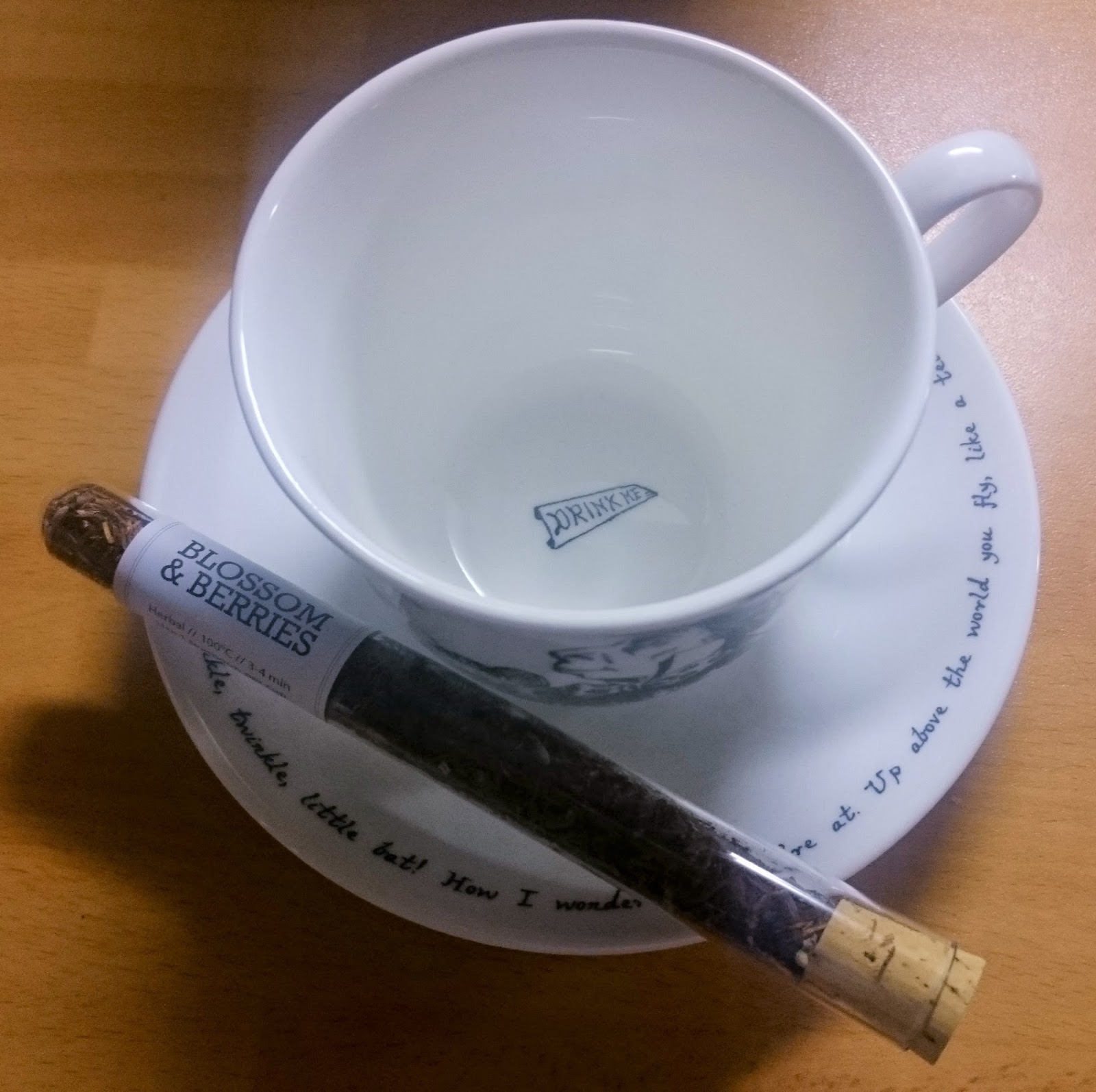
Today I'm going to review Blossom & Berries. My first 'herbal' tea from London Tea Club. Rooibos, or 'red bush' (Aspalathus linearis) is a 'tea' (it is not truly tea, as it is not from the Camelia sinenesis plant) from the South African region. It is apparently part of the legume family, so I guess it's a pea tea, really. It's also naturally caffeine free, which is usually toted around as rooibos' selling point over Camelia sinensis; which is great for those who care and, well, wholly irrelevant for those who aren't over fussed what boost their beverage gives them. I suppose it would make it the tea of the pregnant though.


Visually, the tea is a deep russet, with flashes of purple and orange, where the assorted petals and flowers add to the mix. Upon unstoppering the tube, you are met with a piquant scent, sharp and undeniably fruity. It almost smells more like something you would find at Lush than in a tea box.

My first thought is of strawberries, or perhaps raspberries. The 'berry' title is unmistakable, although putting a finger directly on which is a little more complex. Certainly, it smells like a medly of English hedgerow treats. The card mentions the use of blueberries, although to me, the tea smells much sharper than that. Perhaps the red hue of the leaves mistakenly lead the nose to berries of a similar shade.

Still, there is no denying the berries in the name is well deserved. And blossoms; mustn't forget those. It appears, from sight if not scent, that the blossoms are lavender and rose. According to the card, rosehips also play a pivotal role in the flavouring, alongside currents and raisins, which I guess count as berries? Are grapes berries? I guess they must be; not something I had ever really stopped to consider before, just that grapes were generically fruit.


I opted to try this tea in my one of my favourite tea infusers, a whimsical floating duck, rather than a teapot, and drink it from my Alice teacup. I love this infuser; just look at the little quacky grin as it swims about in its tea-y pond. Furthermore, when it's finished brewing, you place the little ducky in a plastic pond, to catch the drips.

The taste, much like the scent, is much stronger than you'd first expect, although no unpleasantly so. Those who prefer flavoursome teas lacking in delicacy and subtlety, would be a fan of Blossom & Berries. As before, it certainly invokes images of the British countryside. Once again, I feel like there is a strong flavour of strawberry and raspberry, despite knowing that neither of these are listed. The 'blossoms' are less distinct, but help create a heady aroma that fills the senses. It tastes of summer, it tastes of the jam in your cream tea. It's delightful, although I've yet to sample a tea from London Tea Club that hasn't been.

Overall, I very much enjoyed this tea, and it was very distinct from those in January's box. I am truly delighted with the variety I've been recieving each month and have to say that February hasn't been a let down either. I would recommend this tea to anyone who likes strongly flavoured teas and herbal flavours that don't taste like soaked socks. This is for those who enjoy something brightly flavoured, in the middle of the day when there's half an hour to spare on kicking back and relaxing.

Sunday, 21 February 2016

The Cups of the 'Black Pearl'

I know, I know. It's got to mid-Febrewary and I've still not managed to tell you all about my January London Tea Club teas. In very truth, my next package has already arrived (so you'd hope by now)! In my defence, so far 2016 has certainly been engaging and not left a great deal of time to write anything up. I also misplaced my tea cards for January's teas, meaning I got halfway through writing this post and then couldn't continue, as I sort of kind of lacked the notes to go along side it.

So today I will be talking about the Black Pearl. It's a type of tea, not a pirate ship. This was one of the two specialist black teas (as opposed to a flavoured black tea) that came in January's box. I suspect it is called Black Pearl because of the visuals of the tea leaves. They're not your usual loose Assam breakfast tea, all ground down to generic nothingness. No, they're quite large, perhaps a half centimetre in diameter, and tightly furled. They looked like tiny pebbles, or perhaps dried up seeds/berries. They are also, unsuprisingly enough, a deep black brown. That's why it's called black tea, yanno. It's quite difficult to get a decent photo of this to share with you (perhaps I am in need of a more specialist camera than just what is attached to my phone), but while not opalescent, it's quite easy to see where the name comes from. The taste (which I shall get to), also suggests a sophisticated name.

I decided to brew the tea in my Taiwanese Eilong tea set. The tea card suggested to brew 'in a gaiwan, tiny teapot or loose in your cup. The leaves unfurl and sink to the bottom - no need for a tea filter or strainer', so I figured a glass pot would be best, so that I could admire the shape and movement of the leaves. It also allowed me to appreciate the colour, without any influence from the pot or cup itself.


Apparently this tea is Indonesian, grown in Sumatra's volcanic soil by Mountain Tea (there is a tea mountain?!). According to the tea card this was 'the first grower approved in 1989 by the Taiwanese government to grow Taiwanese-style tea abroad'.  Before drinking this (for I have never had tea from a volcanic region before!), I'd have anticipated quite a rough, uncomplicated flavour, not so much earthy but very natural, bitter and strong, but in a pleasant and deliberate manner, rather than that of overstewed Assam. I suppose with the destructive nature of a volcano, I had assumed there would be something harsh about the tea.

It was not. This tea could not be further from what I had expected, and the flavour truly threw me. It had the robust flavours of a fine Assam, but the delicate nature of a Jasmine tea. It was light, both in colour and taste, yet had more body than you'd think. There was also a natural sweetness about it; not the artificial sweetness of Love Tea or the indulgent sweetness of Caramel Cream, but more akin to honey or nectar. It was, as I had suspected, very clean, but it was also smooth, rolling across the palate with ease.

I felt like this was the kind of tea you'd drink, while quitely philosophising in opulent Castle gardens during spring.

I was very impressed by this tea. It was truly delectable and one I would gladly have regularly. It's amazing just how different black teas can taste, when you're drinking several different varieties on daily basis. This is definitely going to the top of my favourites list, although I'll admit I feel that it would not satisfy the craving for a good cuppa the way stronger Assams would. Still, it makes a fine mid-day treat when alcohol is not an option.

Wednesday, 27 January 2016

A Lovely Brew

We interrupt your irregularly scheduled London Tea Club tea reviews to bring you something a little more romantic. Perhaps I should really have waited until next month (the month of highly commercialised lovey doveliness), but instead, here we are.

I introduce to you Love Tea.
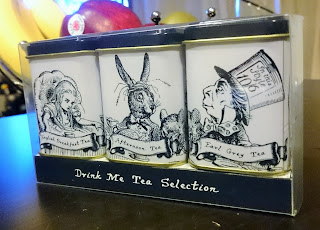
Earlier this month (as I'm sure none of you care) it was my third anniversary with my boyfriend. As such we were taking a break away (a delightful converted wagon shed in the middle of nowhere for the clearest views of the night sky, complete with wood burner for heating and a hot tub for star gazing), and as such one day ended up exploring a city that happened to have a Whittard of Chelsea. For those of you who don't know Whittard is a chain tea shop; while it has interesting teas and paraphernalia, I feel that it does cater more to the casual tea drinker rather than a true tea enthusiast (unlike specialist independent shops, such as the truly amazing Imperial Teas of Lincoln). Still, it's always enjoyable to peruse and it had been quite literally years since I had visited as I no longer have one that is local. I primarily went in to look at teapots and teacups because, in my humble opinion, one can never have enough. The shop was tiny, so their collection was small, although I was drawn to the back where much of the 150th Anniversary Alice in Wonderland collection was on sale. I already have the mug, teacup and teapot, as were bought for me for Christmas by my boyfriend's mother, but I was intrigued to see what else they had. I spotted a little set of three Alice tins, each labelled with English Breakfast, Afternoon and Earl Grey; all staples for any deserving tea collection. They had been marked down to £7 and I thought the caddies were not only cute but, once empty, would be useful for 'travel' tea (I do a lot of camping).
Love at first sight
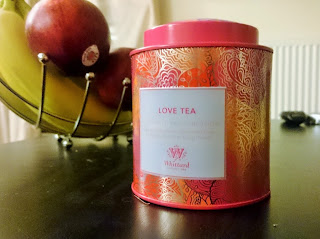
As we were walking back to the front of the shop to pay, by the counter we noticed a new, limited edition collection of vivid swirls of pink and orange packaging; tea, hot chocolate, mugs. It was a beautifully bold design and I noticed that the tea was labelled 'Love Tea', priced at £10. Right before February, hmm? At this point my boyfriend noticed that the shelf below, in a clear glass tea cup, they had the aforementioned tea. Betwixt the dried apple and hibiscus leaves we both spotted tiny, pink sugar hearts, truly a tea befitting of the title Love (if not the 'tea' bit, given there is no Camellia sinensis present, instead being a 'fruit infusion'). For the novelty (noveltea?) alone the two of us knew I needed it in my collection and, after all, it was our anniversary; we just had to get souvenir tea labelled Love, right? Of course we did.
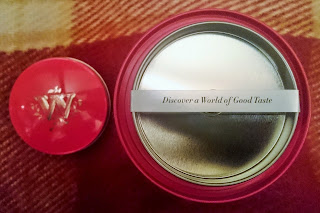
When we got back to our little cabin (after some delectable ramen at the Japanese restaurant Momo-No-Ki in Shrewsbury), we decided to curl up on the sofa in front of the fire and ward away the January chill with a cup of our new tea/infusion, as invited to by the words curling across the tin; 'Love tea? So do we. We couldn't resit adding a confetti of pink sugar hearts'. The cabin was self catering, but despite having a wide array of pots and pans and tools there was no teapot (let alone infuser) to be found. A sign, perhaps, that I really ought to start packing reusable teabags or infusers in my handbag at all times. There was, however, a cafetiere; by no means perfect, but would suffice at not only brewing the tea, but keeping the fruit pieces out of our cups.
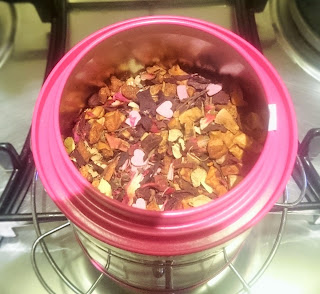
Tea, sweet heart?
So, to the tea itself. Visually, it was deep raspberry tone. Taste wise, the first thing we both noticed was how intensely sweet it was. This was clearly the addition of the sugar hearts, which had now entirely dissolved into the brew. As neither of us ever have sugar in our tea, we both found this a little overpowering. It was not the same natural sweetness of the Caramel Cream, but quite artificial. I feel that for someone who often has sugar in their tea, this would be a delightful treat, but for someone who does not, it was a little sickly. It was a shame because underneath the sugary taste there were some complex flavours. It wasn't wholly unpleasant, but both of us agreed it was not the most exquisite tea we had ever tasted and that it was not one that would be partaken of regularly.
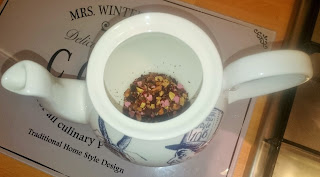
Still, no regrets in buying it. The novelty of the sugar hearts still delighted me and I now had a gorgeous tea caddy (Whittard caddies seem wonderfully made, with a second internal lid to help maintain freshness). Plus, I knew I'd have friends who would appreciate the drink.

A few days later, when we were back at home (and back at work), my parents came over to deliver some yarn for a future knitting project. We got talking about our time away, which prompted me to ask my father (who, if you recall, enjoys an interesting tea as much as I do) if he would like to try some Love Tea, although I did forewarn him of the overwhelming sugar sweet taste. I had offered to remove the hearts, but he decided to first try the drink 'as it was meant to be'. He accepted, so I disappeared to the kitchen to make a pot (in my Whittard Alice teapot, of course). Once again, the first thing that struck about the tea was the sweetness. However, my father also noticed there was a sharp note at the back of the throat; the complex flavours that were, unfortunately, masked by the sugar.
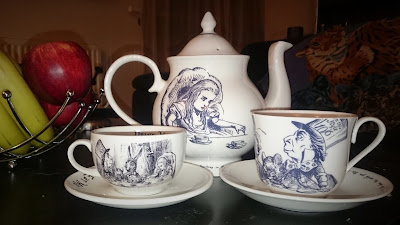

Whittard Alice teapot and teacup (right) and my hand printed
Alice teacup (left) from my mum that made an
unintended pair.

My father also said there was a hint of caramel and queried whether it came from the hearts or not. So I fished out a couple of the tiny pieces of pink confectionery from the caddy for us to try; no, the hearts were not flavoured (they were very much like sprinkles). Unexpectedly, however, eating the hearts alone (how brutal does that sound?) had somehow masked the sweetness of the upon our next mouthful. Finally, a chance to taste the fruit infusion as it was meant to be.
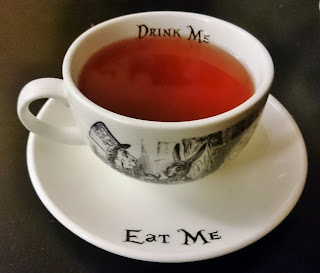
There were a lot of different flavours, but the main body was hibiscus. I felt it tasted both (naturally) sweeter and sharper than hibiscus alone, which was probably the dried apple and the raspberry pieces, respectively. The caramel flavour, upon looking at the ingredients, came from the hazelnut brittle, which no one had realised was in there. This will have also contributed to the sugary taste, and was begin to explain just why it was so strong. There is also beetroot (which I imagine helps give the tea its rich red colouring, alongside the natural rose tones of the hibiscus), cocoa husks, liquorice root, sweet blackberry leaves, coconut pieces and safflower and cornflower petals. It is something quite exotic without bringing in tropical flavours, such as pineapple or passion fruit.


My dad says; 'very sweet. Caramel taste with a bitter undertone, probably from hibiscus. Good if you normally drink tea with sugar. Bit too sweet  if not. Maybe try without the hearts as an option.', while my boyfriend's opinion is 'I found it a bit too sweet. I enjoyed it because I think the name of the tea and the fact it contains sugar hearts make it quite cute for couples but I wouldn't drink it regularly. It might be a good tea to have after a sweet dessert, as the sweetness in the tea would be less obvious.'

My mother actually had a sip of the tea (after imbibing a candy heart) and said it was reminiscent of a summer's day; I would agree. This is the kind of tea that would be perfect on a lazy, summer's afternoon, alongside a scone, whilst relaxing in the garden as a butterfly floats by. One to be drank all in the golden afternoon, you could say.
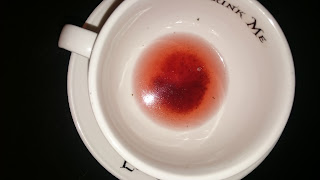
Leaves a lot of sediment after!
So what is the final verdict of Love Tea? Firstly, the title is misleading; there is no 'tea' and I'm not sure it is one I would recommend, for its taste alone, to someone who loves tea. Someone who loves the idea of tea, or loves enjoying a variety of hot drinks, but I'm not convinced it is one for the connoisseur. Not that there is anything wrong with enjoying something less prestigious; this tea only intends to be fun and in that it succeeds. Secondly, for me, I felt the tea was massively improved by the lack of sugar hearts. It was much more pleasing to my palate and one that I look forward to enjoying again in the warmer months. For those who are prone to adding a spoonful (or five) of sugar to their daily cup, then this will perhaps be perfect addition to the tea cupboard.

Overall, it's a wonderfully whimsical tea with its pretty little hearts, and a cute way of showing your feelings for a loved one, even if it requires a little tinkering to make the perfect cup. Even though it will never be one of my highest rated teas in terms of flavour, in terms of presentation it receives full marks and will forever be a welcome reminder of my time away in the little wooden cabin.

Saturday, 16 January 2016

A Tea Dream, 'Caramel Cream'

Last weekend my parents came over for Sunday lunch (another time honoured British tradition). As mum had bought me the London Tea Club subscription (and she had read my blog) I excitedly showed her the packaging, which she agreed was rather delightful. My father then asked a most sincere question; which is your favourite?

Truthfully, I had still yet to try even one. Oops. To which it was then suggested that we try one together. My mother isn't over fond of 'fancy' or flavoured teas (just the odd Earl Grey, otherwise nothing beats a good Assam) and my boyfriend is some heathen who isn't over fond of tea at all, which left just myself and my father to try one. We opted for the Caramel Cream because not only did it smell absolutely divine I felt that it was a tea that I could pay less attention to (no need to meditate on watching leaves unfurl).

I opted to make a pot, selecting my two cup cast iron tea pot, with my little Japanese green glaze cups to drink from (I also made mum an Earl Grey and I think my boyfriend just had water, but no one cares about his uncultured tastes anyway). As I poured the tea into my measuring teaspoon I observed just what was there. Black tea leaves, obviously (I suspect Ceylon), but also tawny and sage tinged leaves and a single golden drop of butterscotch. I have since realised that there was only once piece of butterscotch in my whole test tube, so I may look at adding my own to future cups as the scent and flavour as it melts is gorgeous.

It is not the only tea I own whereby there are solid treats designed to melt into the infusion. I also have a Sticky Toffee Pudding with pieces of, well, toffee, and I'm sure my Marzipan Rum tea has solid rocks of sugar or similar. I love tea with melting ingredients; it just seems to add another dimension.

Anyway. I consulted the card that came with my tea. The dried 'leaves' are, in fact, petals of calendula and sunflower. Interesting; I would never have considered sunflower as part of creating a 'cream' or 'caramel' flavoured tea.

Once my timer went off, I removed the tea basket from the pot and proceeded to pour myself and my father a tiny cupful. The colour was a rich ochre. The aroma was surprisingly robust, sweet and decadent.

So onto our first sips, which immediately elicited a positive response. I feel that I had perhaps got the tea to water ratio a little off, as I felt it a touch too week, but my father disagreed. This tea wasn't a subtle flavour. It tasted much as you'd expect from a tea entitled Caramel Cream. A sugary sweetness, with a creamy aftertaste, such as you might get after eating good quality fudge. This is the Lindt Lindor of teas.

When asked to comment, my father said; 'it was really nice and creamy and caramelly. I'd say it was smooth and a good drink with a sweet accompaniment, like cake, etc.

It didn't take long for the the two of us to finish off the pot; which was good in the sense that I really needed to get on with cooking dinner.


I definitely appreciated this tea. It's  the sort of tea I'd drink in an evening at home alone, curled up with a light hearted, fantasy novel or a non-fiction history novel, in front of the fire (only not, because are fire is faux, but if I could, I would). The tea card suggests drinking it with sugar and milk to 'create a rich and creamy indulgent treat'. Now even though I rarely add milk to my tea (why mar perfection?), even before reading the card I had thought such an addition would not be so unwelcome in this blend. Perhaps next time I drink it I will allow a splash in the bottom of my teacup, you know, for the sake of completion. The scientist in me would not consider the analysis of such a blend to be exhaustive without attempting it; for once, it is not tea treason, but in the name of science...


So next time, perhaps I'll have tried this with milk. Or perhaps not. Either way, this is a truly superb blend and, if I could, I would gladly depart with good money for more. Wonderous, indeed!

Friday, 8 January 2016

London Tea Club: January

On the 6th of January I came home from a late shift at work to find an adorably small parcel waiting for me. I was expecting it, but even if I wasn't it was quite clear from the packaging just what it was; it was my first delivery from my new 'teacription' with London Tea Club, a Christmas gift from my mum (for three months). I was excited for this delivery as I enjoy getting things through the post that aren't junk and bills (I have been subscribed to a popular snack company since I began university to give me something to look forward to every two weeks) and I adore high quality, loose leaf tea. What isn't to love?

Upon opening the demure white box, I was greeted with a postcard welcoming me to the Club and the new year, as well as updates on this months teas (of which I only got a selection). There was also a cream coloured cotton bag, emblazoned with the Club logo; inside this, I knew, was going to be my three January teas. Without hesitation, I carefully opened the pouch and found three neatly labelled test tubes, as well as a small brown envelope. The presentation was absolutely delightful and easily elicited a smile from me. It was quirky yet sophisticated, bringing images of eccentric Victorian explorers or engineers to the forefront of the mind, and everything that tea deserves in presentation outside of serious ceremony. Someone has clearly put a lot of effort in deciding this packaging.


The labels on my test tubes informed me that I had 'Frozen Summit', 'Black Pearl' and 'Caramel Cream', along with the type of tea, brewing temperature and time. Brewing tea for the recommended time is some I have only recently been seriously heeding. I always thought it was one of those pretentious things invented by those who wanted to separate themselves as an elite. However, since timing about a third to a half of every cup (or pot) I brew, I have noticed a stark difference. The teas a sweeter, bolder and lack the bitter after taste of overly steeped tea (fun fact: apparently, if you want a stronger taste add more tea, not time). You would have thought it would have taken me less than ten years to figure it out, but apparently not. So, if you are a person that savours fine teas, without milk or sugar (although there is nothing wrong with the British staple of a good ol' cuppa) then I would definitely recommend taking the effort to brew your tea correctly. I was genuinely surprised at how obvious the difference was.

This month I have received an oolong tea, a black tea and a flavoured black tea. A couple of years ago I may have been a little disappointed to have received only one flavoured tea, as it's much easier to appreciate the difference in taste from a PG Tips or Yorkshire Gold tea bag (psh, I didn't even have supermarket Assam in tea bag form until I went to uni and loose leaf tea was suddenly less convenient; I extend eternal thanks to my parents for bringing me up on loose leaf Co-Op Red Label), but since properly organising my tea, making a conscious effort to use my teapots and having three or four different types a day (many of which are unflavoured) I am starting to realise the subtle differences in taste between them. My current favourite unflavoured black tea is my 'Assam Tippy Orthodox', closely followed by my 'Russian Caravan'. As such, I am intrigued as to taste test this oolong ('Frozen Summit') alongside my 'Black Dragon Oolong' (which is a silly name for an oolong, really, given that 'oolong' literally means 'black dragon'). Plus, oolong is pretty, in the sense that the leaves resemble little, earthy coloured beads that unfurl upon adding hot water. This is definitely a tea for one of my glass teapots.


Oh, I forgot to mention, so preoccupied was I by the tea itself! The little brown envelope! Inside were a trio of small cards, each detailing the profile of the tea; where it's from, best way to brew/present, when best to drink (e.g., after a meal). There was also a set of empty tea bags, which I thought was such a lovely touch as I realised that not every tea enthusiast will enter this subscription armed with six single serve teapots and twelve infusers (I'd say that I wish I was exaggerating, but really, I'm not; I am unashamed of my tea paraphernalia collection). I probably will use a tea bag at some point (of which I do not believe them to be reusable) for the novelty, although it may be with one of my many other loose leaf teas.


Overall, I think this is absolutely wonderful and cannot wait to try my first one. Indeed, the only reason I have yet to sample them is because I want to dedicate a portion of my day my day to give the tea the attention it deserves (and before anyone calls me out as being unnecessarily obsessive, remember that much of Asian tea culture sees brewing and drinking tea as a way of meditation and reflection). I also want to be able to write a bit more than 'had a cuppa, it was boss' in my blog posts, which is probably what you'd get if I treated these teas the way I do my sleepy, morning cup (I drink far too much tea to spend a half hour philosophising about it's complexities every time I make it; tea is wonderfully versatile like that. A comfort during the stress of writing essays, part of daily routine alongside crappy day time television and a custard cream, a social point when guests are over, or as a way of stopping, taking a pause in life, just to think and appreciate).

Due to late shifts at work all week, trying one of these new teas may be put on hold for a couple of days, but I am patiently awaiting it. So far, however, I am truly impressed with my first months box and hope that the tea follows suit and does not disappoint (as if tea could ever disappoint, hah!). Certainly, I would recommend this teacription to anyone who enjoys tea, interesting post and something a little bit different. The price tag attached may seem a little high, but I think it is reasonable for what you receive. Truly, I look for not only to these three teas, but also the coming months. I should also probably check out the members area of the Club, although I'm not sure I have the log in details.

Well, I guess all that remains is for me to go an put the kettle, and savour a little bit of magic

Thursday, 7 January 2016

In the Teaginning...

Hello and welcome to my newest blog, one that will follow one of my greatest (and simplest) passions; that of the wonderous concoction of tea. Those of you who know me, know I am devoted to this potion of brewed leaves, and my collection of tea and paraphernalia is bordering on obsessive. (Forty plus teas and counting in my dedicated tea drawer; Oolong, Assam, rooibos, herbal, I am not discriminative.) After all, I am British; what do you expect? Is it not the truest form of patriotism to indulge on daily basis in this moment of warm meditation?

Although I began my journey with tea many years hence, I am still traversing it, still learning new things every day. In truth, it is a secret desire of mine to some day become, what I call, an alchteamist. I still recall the first time I drank tea black, arguably the time I truly fell in love after having savoured the pure, unaltered taste of the Camellia sinensis. plant I was aged thirteen, and, at a re-enactment, the milk was all sour. After an exclamation to my father that 'you can drink it without milk', I imbibed and have never since looked back. I feel that this is a journey I would like to share; this modest bit of magic and how it has not only supported individuals in both sickness and in health but, truly, has changed the world and its cultures.

I hope you enjoy reading (preferably with a brew of your own).